
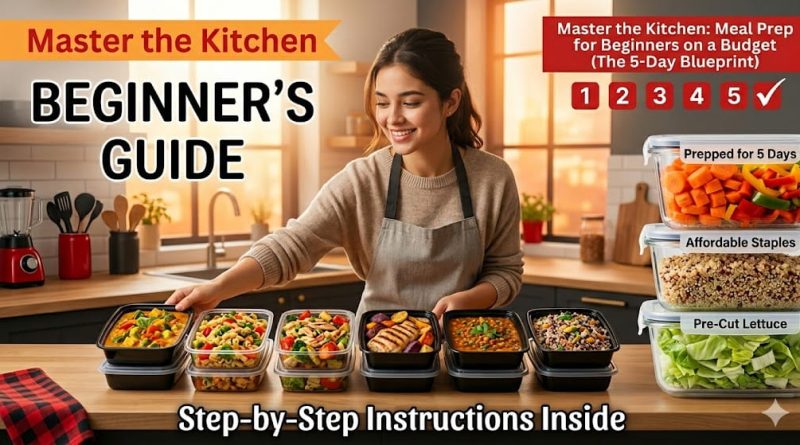
Master the Kitchen: Meal Prep for Beginners on a Budget (The 5-Day Blueprint)
Stepping into the world of healthy eating often feels like a financial burden, but it doesn’t have to be. Mastering Meal Prep for Beginners on a Budget is the ultimate “cheat code” for surviving a busy work week while keeping your bank account intact. In my experience, the difference between a stressful Sunday and a seamless Monday is simply having a plan. I tested this tool of structured cooking and found that it doesn’t just save money—it saves your sanity.
How to save money with meal prep: A budget-friendly approach
The high cost of daily convenience
Buying lunch every day at work is the fastest way to drain your savings. Those $12–$15 bowls add up to hundreds of dollars a month, mostly spent on labor and packaging rather than nutrition.
Bulk buying for significant savings
The best solution is purchasing base ingredients like rice, beans, and grains in large quantities. Buying in bulk reduces the price per serving to under $2, providing a massive financial advantage over time.
The hidden expense of food waste
Common challenges I faced included throwing away half-used vegetables at the end of the week. This is essentially throwing money in the trash because of a lack of a clear recipe plan.
Zero-waste cooking strategies
Plan your meals around similar ingredients. If you buy a large bag of spinach, use it in your breakfast smoothies AND your lunch salads to ensure every leaf is consumed before it spoils.
Impulse buying during grocery runs
Walking into a store without a list leads to “shiny object syndrome,” where you buy expensive snacks and pre-cut fruits that bloat your grocery bill unnecessarily.
The strict list-only discipline
Always shop with a written list based on your meal plan. By sticking to the list, you bypass the marketing traps in the aisles and ensure you only pay for what you will actually eat.
Best grocery shopping tips for cheap meal prep
Overpaying for brand-name labels
Many beginners assume that expensive brands equal higher quality. In reality, you are often paying a premium for the colorful packaging and television commercials.
Opting for store-brand staples
Switch to generic or store brands for items like canned beans, salt, and flour. I tested this tool and found no discernible taste difference, while the price was often 40% lower.
The trap of out-of-season produce
Buying strawberries in the middle of winter or asparagus in the fall can double your produce bill because of the high import and transportation costs involved.
Embracing seasonal and frozen varieties
Shop for what is currently in season or head to the freezer aisle. Frozen vegetables are picked at peak ripeness and are much cheaper than “fresh” imports that have traveled thousands of miles.
Paying for the “convenience” of pre-cut food
Buying pre-chopped onions or “zoodles” costs triple the price of the whole vegetable. You are paying the store to do 60 seconds of knife work for you.
Investing time in manual preparation
Buy whole vegetables and spend 10 minutes at home doing the chopping yourself. This small investment of effort is the most effective way to keep your Meal Prep for Beginners on a Budget truly affordable.
Anti-inflammatory Meal Plan for Busy Professionals: A Science-backed 7-Day Guide
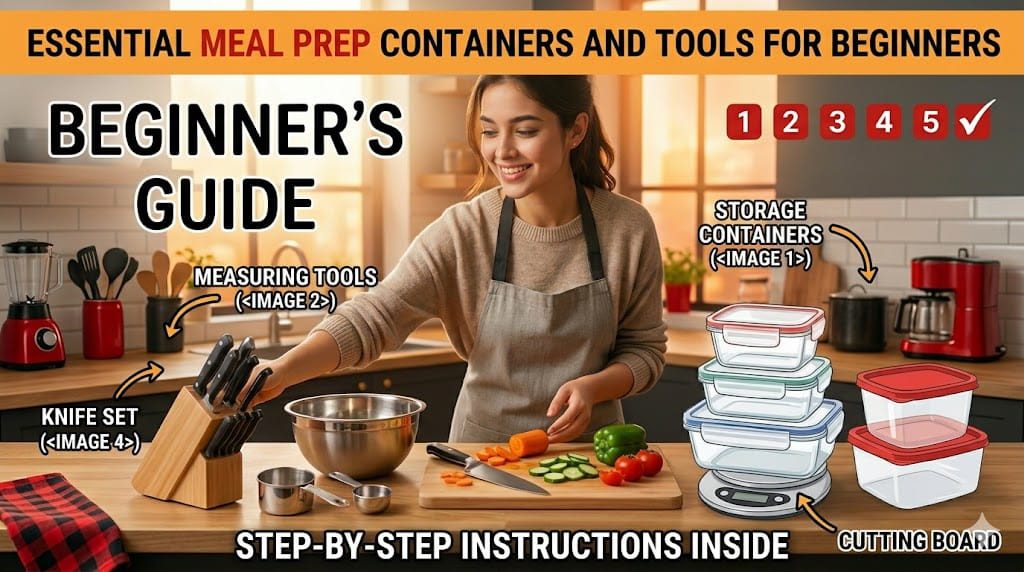
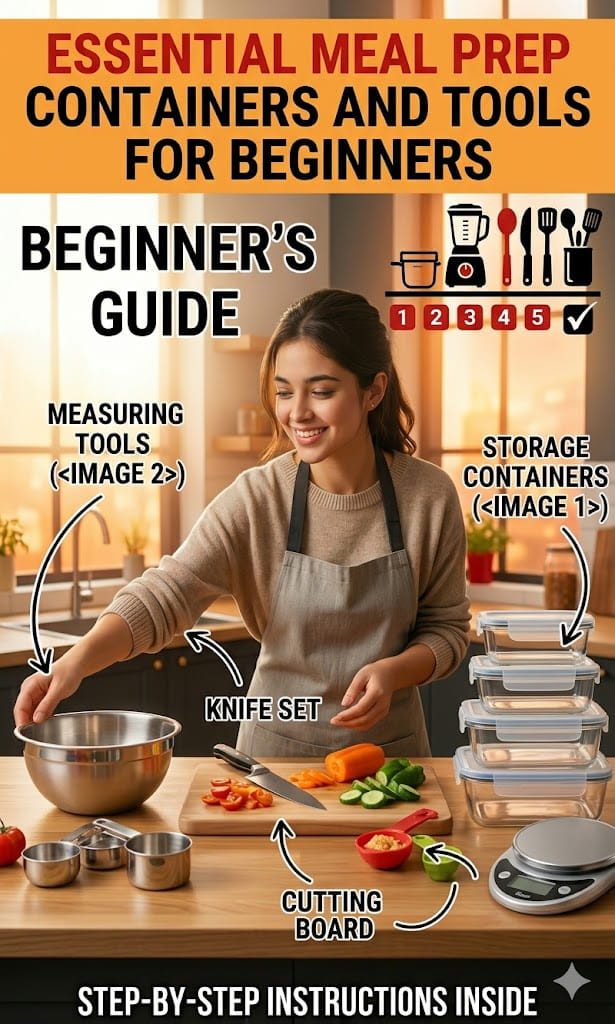
Essential meal prep containers and tools for beginners
The frustration of leaking containers
There is nothing worse than opening your work bag to find salad dressing all over your laptop. Cheap, flimsy containers are a disaster waiting to happen and lead to wasted food.
Investing in airtight glass storage
High-quality glass containers with locking lids are the best solution. They are leak-proof, microwave-safe, and don’t absorb odors like plastic, making them a one-time investment for years of use.
The clutter of mismatched lids
Owning a cabinet full of random plastic bins makes the prep process frustrating. Searching for a matching lid adds unnecessary time to an already busy Sunday.
Uniformity through stackable sets
Buy a single set of identical containers. This allows you to stack them easily in the fridge, maximizing space and ensuring that every lid fits every base perfectly.
Lack of basic kitchen efficiency
Trying to prep five days of food with one small knife and a dull peeler makes the process take twice as long as it should, leading to burnout.
Equipping with a sharp chef’s knife
You only need three tools: a sharp 8-inch chef’s knife, a large cutting board, and a rimmed baking sheet. A sharp knife is safer and faster, making the “prep” part of meal prep enjoyable.
Step-by-step 5-day healthy meal prep routine
The “chopping fatigue” bottleneck
If you try to cook and chop simultaneously, your kitchen will quickly turn into a chaotic mess. This “multi-tasking” actually slows you down and increases the risk of accidents.
The “Wash and Chop” first rule
Before turning on any heat, wash and chop every single vegetable and protein. Having everything ready in bowls (mise en place) allows the actual cooking phase to happen in a smooth, rapid flow.
Oven space mismanagement
Waiting for one dish to finish before putting in the next can turn a 2-hour prep session into a 4-hour ordeal. It is a waste of both time and electricity.
Maximize oven real estate
Use the “Sheet Pan” method. Roast your chicken on one side of the tray and your broccoli on the other. Use two racks simultaneously to finish all your roasted components at once.
Forgetting to multi-task the stovetop
Standing and watching a pot of rice boil while your pans are cold is a common beginner mistake that stretches out the process.
Parallel cooking technique
While the oven is roasting, have your grains boiling on one burner and your protein searing on another. Using all your kitchen “engines” at once is the only way to finish a week’s prep in under 2 hours.
Food safety rules: How to store meal prep properly
The danger of the “danger zone”
Leaving cooked food on the counter to “cool down” for hours allows bacteria to multiply rapidly. This is a primary cause of foodborne illness in home-prepped meals.
The rapid cooling method
Divide large batches into smaller, shallow containers immediately. This increased surface area helps the food cool down to a safe temperature much faster before it goes into the fridge.
Confusion over expiration dates
Many beginners don’t know how long cooked food actually lasts, leading them to either eat spoiled food or throw away perfectly good meals out of fear.
The “3-4 Day” fridge rule
Standard food safety guidelines suggest that cooked meat and veggies stay fresh for 3–4 days. For a 5-day plan, keep three days in the fridge and put the last two days in the freezer.
Cross-contamination in storage
Storing raw meat on the top shelf of the fridge can lead to drips that contaminate your ready-to-eat meal prep containers below.
Bottom-shelf raw storage
Always store raw ingredients on the lowest shelf of the refrigerator. This simple organizational habit ensures that your Meal Prep for Beginners on a Budget stays safe and hygienic all week.
Master the Prep: Video Tutorial
To see these techniques in action, watch this highly-rated guide on efficient budget prepping:
How to keep your meal prep fresh and delicious all week
The “soggy vegetable” syndrome
Packing dressed salads or soft vegetables on Sunday often results in a mushy, unappealing mess by Wednesday. This texture issue makes you want to abandon your prep for takeout.
Strategic layering techniques
For salads, put the dressing at the very bottom, followed by hard veggies (carrots/chickpeas), and the greens at the very top. This “Jar Method” keeps everything crisp until you shake it up.
Dry and rubbery reheated protein
Microwaving chicken or turkey for too long at high power turns it into “shoe leather,” making the meal unpleasant to eat halfway through the week.
The “Water Trick” for reheating
Before microwaving, splash a teaspoon of water over your food or cover it with a damp paper towel. This creates steam that rehydrates the protein and keeps it juicy.
Flavor fatigue by day four
Eating the exact same tasting meal five days in a row can be soul-crushing. Without variety, your brain will crave the high-flavor profiles of processed fast food.
The “Sauce on the Side” solution
Keep your base meals neutral. Use different condiments—like Sriracha one day and Pesto the next—to change the entire flavor profile of the same chicken and rice base.
Tips for staying consistent with meal prep long-term
The “over-ambition” burnout
Trying to cook five new, complex recipes in your first week is a recipe for failure. It takes too much mental energy and usually ends with a messy kitchen and a tired cook.
Start with the “2-2-1” rule
Begin by prepping just 2 breakfasts, 2 lunches, and 1 dinner. Success with a smaller goal builds the confidence needed to eventually tackle a full 5-day routine.
Viewing prep as a “chore”
If you hate the time spent in the kitchen, you will eventually stop doing it. Negativity is the biggest threat to your new healthy lifestyle habit.
Pair prep with entertainment
I tested this tool of “Entertainment Stacking.” Only allow yourself to watch your favorite Netflix show or listen to a specific podcast while you are prepping. It turns the time into a reward.
Forgetting your “Why”
When you’re tired on a Sunday, it’s easy to say “I’ll just buy lunch this week.” Without a strong motivation, the habit will not stick.
Track your financial wins
Keep a “Savings Jar.” Every time you eat a prepped lunch instead of buying one, put $10 in the jar. Seeing the physical evidence of your Meal Prep for Beginners on a Budget success is the best long-term motivator.
Conclusion
Transitioning to a lifestyle of Meal Prep for Beginners on a Budget is the most impactful decision you can make for your health and your wallet in 2026. By addressing the common pitfalls of food safety, storage, and shopping, you transform a daunting task into a streamlined 2-hour routine. In my experience, the best solution isn’t perfection; it’s consistency. Start small, use the “Water Trick” for reheating, and keep your sauces varied. For more detailed nutritional guidelines, you can download the USDA Seasonal Produce Guide PDF to plan your next grocery trip. Remember, you are only one prep session away from a stress-free, healthy week!